logo

Information and Guidance notes

CHAPTER 1 - INTRODUCTION

1.1. Foreword by the Regulator

1.2. Legal background and basis of these information and guidance notes
1.2.1. The principal legislation governing CICs
1.2.2. Links to the legislation
1.2.3. Disclaimer
1.2.4.Contact point for issues about the legisaltion

1.3. An overview of CICs
1.3.1. Basic legal structure and special features
1.3.2. Eligibility to register as a CIC
1.3.3 Other things to consider

CHAPTER 2 - PRELIMINARY CONSIDERATIONS

2.1 Considerations before choosing to form a CIC
2.1.1. What are you trying to achieve?
2.1.2. Major considerations
2.1.3. Do you understand the permanent effect of the asset lock?
2.1.4. Useful websites

2.2. Who can form a community interest company (CIC)
2.2.1. Restrictions on forming as a community interest company

2.3. Defining "community" in community interest company

2.4. Charities converting to CIC status or vice versa
2.4.1. Conversion of a charity to a CIC in GB (see chapter 4)
2.4.2. Conversion of a charity in Northern Ireland to a CIC
2.4.3. CIC converting to a charity (see chapter 10)
2.4.4. A CIC converting may have wholly charitable purposes
2.4.5. A CIC may pass its assets and profits to a charity
2.4.6. Some points to consider

2.5. Charities considering setting up a CIC subsidiary company

2.6. Industrial and provident societies (IPS)

2.6.1. IPS considering converting to a CIC (see chapter4)
2.6.2. CIC converting to an IPS BenCom (see chapter10)
2.6.3. Useful websites:

2.7. Excluded companies and political activities

2.8. Community interest company names

CHAPTER 3 - CICS - LIMITED COMPANIES

3.1. Community interest companies - limited liability companies

3.2. Community interest companies - limited by guarantee

3.3. Community interest companies - limited by shares

CHAPTER 4 - CREATING A CIC

4.1. Incorporating a new community interest company
4.1.1. The documents you need to deliver to form a new CIC
4.1.2 Premium same day registration service unavailability
4.1.3. The effect of incorporation
4.1.4. Statutory documents placed on the public record

4.2. Converting an existing non-charitable company to a CIC
4.2.1. The documents you need to deliver to convert to a CIC
4.2.2. Members dissenting to the passing of the resolutions
4.2.3 Premium same day registration service unavailability
4.2.4. The effect of incorporation
4.2.5 Accounting reference dates
4.2.6. Statutory documents placed on the public record

4.3. Converting a charity to community interest company

4.3.1. Charitable companies in England, Wales and Scotland
4.3.2 Unincorporated charities
4.3.2. Charitable companies converting to a CIC in England, Wales and Scotland
4.3.5. The pre-existing corporate property of the charitable company
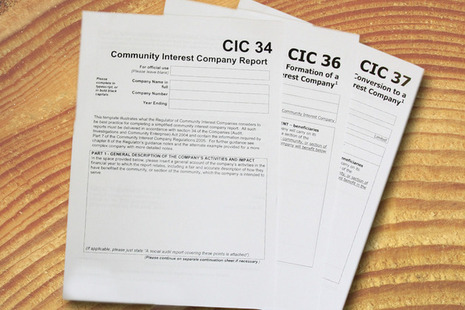
4.3.6. The Form CIC37 – community interest statement
4.3.7. Where to obtain forms and guidance
4.3.8. Timing for filing the resolutions
4.3.9. Premium same day registration service unavailability
4.3.10. The effect of conversion
4.3.11. Accounting reference dates
4.3.12. Power of the Charity Commission to quash the conversion
4.3.13. Conversion of a CIC into a charity

4.4. Converting an IPS in England, Wales, Scotland or Northern Ireland to a CIC
4.4.1. Background
4.4.2. Eligibility
4.4.3. The Process
4.4.4. Examples of completed forms

4.5 Local Authorities and Community Interest Companies

4.5.1. What is a community interest company
4.5.2. Why are CICs relevant to local authorities?
4.5.3. Key features of a CIC
4.5.4. CICs as limited companies
4.5.5. Criteria for forming / converting to a CIC
4.5.6. Community interest test
4.5.6.1. The Basic Test
4.5.6.2. What activities are “carried on for the benefit of the community”?
4.5.7. Activities which will prevent a company from satisfying the test
4.5.8. Points to consider
4.5.9. Asset lock
4.5.9.1. Basic prohibition
4.5.9.2. General exceptions (applicable to all CICs)
4.5.10. Points to consider
4.5.11. Community interest company report
4.5.12. Supervision of CICs by the Regulator
4.5.13. Tentative conclusions
4.6. The Community Interest Test

4.7. The role of the Registrar and the Regulator

4.7.1. Decisions by the regulator

4.8. Where to file documents

4.8.1. Electronic filing of documents

4.9. Fees

CHAPTER 5 - CONSTITUTIONAL DOCUMENTS

5.1. Memoranda and articles of association (constitutional documents)
5.1.1. The memoranda of association for a CIC
5.1.2. The articles of association of a company
5.1.3. Articles of association for a CIC
5.1.3.1. Model articles provided under the Companies Act 2006
5.1.3.2. Model memoranda and articles for community interest companies
5.1.3.3. The objects of a community interest company
5.1.4. The effect of the Companies Act 2006 on an existing CIC
5.1.4. Application to register a company (Form IN01)

5.2. Statutory clauses required in the articles of a CIC
5.2.1. The specified provisions
5.2.2. Model memoranda and articles for community interest companies

5.3. Altering the articles of association (excluding the objects)
5.3.1. Change of company name
5.3.2. Change to the company type and/or share capital

5.4. Altering the object statement of the articles of association
5.4.1. Documents to be delivered to the Registrar
5.4.2. Approval by the Regulator

CHAPTER 6 - THE ASSET LOCK

6.1. Restrictions on the transfer of assets (the Asset Lock)

6.1.1. A transfer of assets must satisfy certain requirements
6.1.2. What is a ‘specified’ asset-locked body
6.1.3. Restrictions on the return assets to members
6.1.4. Assets can be used as collateral
6.1.5. Interpretation of transfer of assets
6.1.6. The community interest test and the asset lock
6.1.7. A CIC providing a service at less than the market rate

6.2. Dividends and an overview of the Dividend Cap
6.2.1. CIC CLG without a share capital
6.2.2. CIC CLS or CLG, with a share capital, adopting Schedule 2
6.2.3. CIC CLS or CLG, with a share capital, adopting Schedule 3
6.2.4. Restrictions on the payment of dividends

6.3. The Dividend Cap
6.3.1. The three elements to the dividend cap
6.3.2. Amount of first caps
6.3.3. Maximum dividend explained
6.3.4. Maximum aggregate dividend explained
6.3.5. Carrying forward unused dividend capacity explained
6.3.6. Further examples

6.4. Performance related interest cap
6.4.1. Amount of first cap

6.5. Redemption and repurchase of shares and reduction of capital
6.5.1. Redemption and purchase of shares
6.5.2. Reduction of capital
6.5.2.1. Distribution of assets to members by way of reduction of capital

CHAPTER 7 - FINANCING CICS

7.1. Share capital financing
7.1.1. Financing: Companies limited by guarantee with no share capital
7.1.2. Financing: Companies limited by shares
7.1.3. Ordinary share capital
7.1.4. Preference shares
7.1.5. The asset lock
7.1.6. Distribution on winding-up
7.1.7. Regulation of share issues
7.1.8. Patient capital investment into the social enterprise sector

7.2. Loan capital and debentures
7.2.1. Lenders to the third sector

7.3. Debt with equity characteristics

7.4. Charges on assets

7.5. Other sources of finance
7.5.1. Grants
7.5.2. Asset based lending
7.5.3. Employee share ownership schemes

7.6. Tax, Rate Relief, Gift Aid & Loan or Equity Finance
7.6.1. VAT
7.6.2. Discretionary rate relief
7.6.3. Gift aid
7.6.4. Donations to charities
7.6.5. Loan or equity finance

CHAPTER 8 - STATUTORY OBLIGATIONS

8.1. Statutory obligations

8.1.1. Annual reporting requirements
8.1.2. Annual accounts
8.1.3. Annual community interest company report with £15 fee
8.1.4. Delivery of the accounts and community interest company report
8.1.5. Timing

8.2. Annual return

8.3 Other Requirements
8.3.1. Change of registered office
8.3.2. Change of directors, company secretary or their details
8.3.3. Other obligations

CHAPTER 9 - CORPORATE GOVERNANCE

9.1. Role of Directors and Members
9.1.1. Corporate Governance Overview
9.1.2. The role of the Director
9.1.3. Member

9.2. Relationship with other stakeholders

9.3. Directors’ remuneration
9.3.1. Key points
9.3.2. CIC Directors may be paid for their services
9.3.3. General company law rules in relation to director’s remuneration
9.3.4. The community interest test, the asset lock & remuneration
9.3.5. Charitable trustees as directors of a subsidiary trading company
9.3.5.1. Payment of a charity trustee for services as a director
9.3.6. What is “reasonable” remuneration?
9.3.6.1. Particular responsibilities, skills and expertise of individual directors
9.3.6.2. Nature, size and performance of the company’s business
9.3.6.3. Financial position of the company
9.3.6.4. Published guidance on good corporate governance
9.3.6.5. Views of stakeholders
9.3.7. Transparency
9.3.8. Action by the Regulator
9.3.9 Directors’ payments and benefits and Tax returns

CHAPTER 10 - TRANSFER OF ASSETS AND CEASING TO BE A CIC

10.1. Transfer of assets to another asset locked body
10.1.1. How to specify an asset-locked body
10.1.2. Transfers to a non-specified asset-locked body
10.1.3. Other transfers for the benefit of the community

10.2. Conversion of a CIC to a charity
10.2.1. Documents to be delivered to the Registrar of Companies
10.2.2. Timing for passing special resolutions
10.2.3. The process of registration

10.3. Conversion of a CIC to a permitted Industrial and Provident Society

10.3.1. The legislation
10.3.2. What is a permitted Industrial and Provident Society?
10.3.3. Documents to be delivered to the Registrar of Companies

10.4. Liquidation and insolvency

10.4.1. Solvent companies (generally)
10.4.2. Insolvent companies (generally)
10.4.3. Receivership
10.4.4. CIC specific rules on distribution of assets

10.5. Strike off and dissolution of a community interest company
10.5.1. Defunct community interest companies
10.5.2. Voluntary strike-off and dissolution of community interest companies
10.5.3. Restoration

CHAPTER 11 - THE REGULATOR

11.1. Approach to regulation


11.2. Advice and guidance

11.3 Investigations

11.4. Enforcement
11.4.1. Basis of enforcement
11.4.2. The enforcement powers
11.4.2.1. To bring civil proceedings in the name of a CIC
11.4.2.2. To Appoint or Remove directors
11.4.2.3. To appoint a manager of a CIC
11.4.2.5. To order the transfer of shares
11.4.2.6. To present a petition to the Court for the winding up of a CIC
11.4.2.7. To apply to the Court for an order that the dissolution is void
11.4.2.8. The Default Condition

11.5. Accountability of the Regulator

11.6. Appealing against the Regulator’s decisions
11.6.1. Introduction
11.6.2. The appeals framework
11.6.2.1. Introduction to the legislation
11.6.2.2. Which decisions can be appealed?
11.6.2.3. The Appeals Process
11.6.2.4. Time limit for beginning the appeal process
11.6.2.5. Notices of Appeal
11.6.2.6. Role of the Regulator
11.6.2.7. Procedure before the Appeal Officer

ANNEX A - MODEL CONSTITUTIONS FOR COMMUNITY INTEREST COMPANIES: INTRODUCTORY INFORMATION

ANNEX B - MODEL SPECIAL RESOLUTIONS

ANNEX C - APPROVED FORMS AND TEMPLATES

ANNEX D - EXAMPLES OF COMPLETED FORMS

ANNEX E - COMMUNITY INTEREST COMPANY FEES

ANNEX F - INFORMATION AVAILABLE

ANNEX G - TABLE OF DIVIDENDS AND INTEREST CAPS

ANNEX H - ABBREVIATIONS, DEFINITIONS AND REFERENCES